
Choosing the right orthodontist is one of the most important decisions you’ll make for your family’s smiles. With treatment often spanning 12 to 24 months, you want a team that feels like the right fit from the very first visit. This guide walks you through exactly how to evaluate a family orthodontist, what to look for, and the questions to ask before you commit. Along the way, you’ll learn how clear aligners, clear braces, and metal braces each fit different family members.
What Is a Family Orthodontist and Why the Choice Matters
A family orthodontist is a dental specialist who treats children, teens, and adults under one roof, handling everything from first evaluations at age 7 to adult clear aligner cases. Unlike a general dentist, an orthodontist completes two to three years of residency after dental school focused specifically on tooth movement, jaw growth, and bite correction.
Here’s the simple way to think about it: all orthodontists are dentists, but not all dentists are orthodontists. That extra training matters when you’re entrusting someone with your child’s developing bite or your own long-awaited personalized smile transformation.
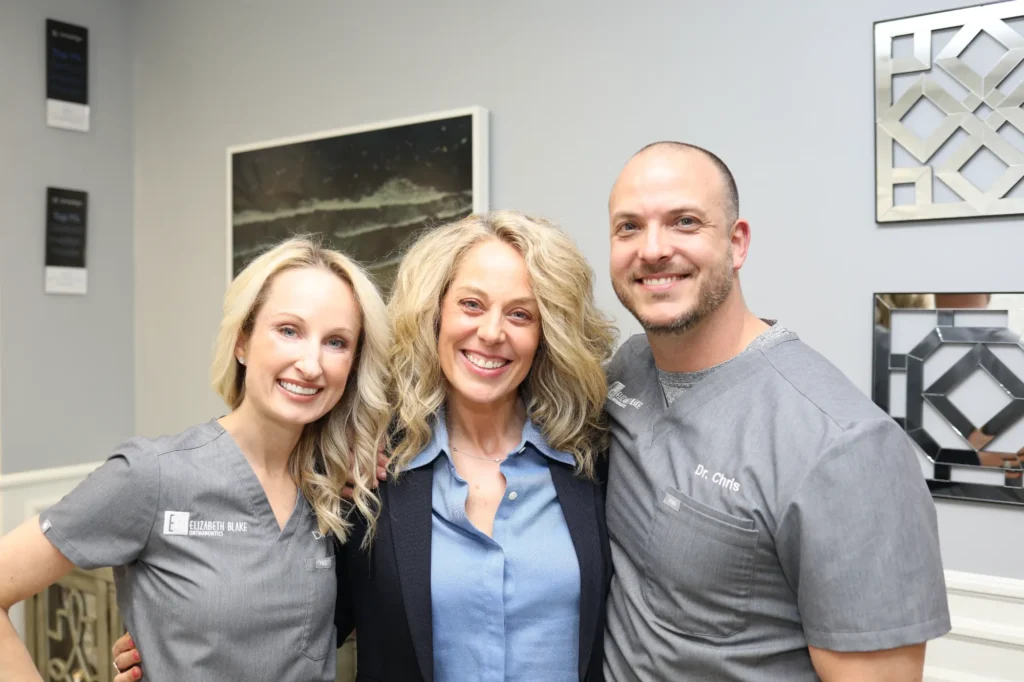
Treatment isn’t a one-visit event. You’ll see your orthodontist regularly for a year or more, which means fit and trust matter as much as credentials. As an expert husband-and-wife team, Dr. Blake and Dr. Peluso personally develop every personalized treatment plan because the practice does not believe in assembly-line care.
A family-focused practice also simplifies life. One office, one set of records, back-to-back sibling appointments, and a team that already knows your family. That continuity makes a real difference across life stages, and it supports every family member from first grader to grandparent.
How to Evaluate and Choose a Family Orthodontist: Step-by-Step
Finding the right family orthodontist doesn’t have to feel overwhelming. Follow these six steps to narrow down your options and feel confident in your choice.
- Verify specialist training and AAO membership. Confirm the provider completed an accredited orthodontic residency and is a member of the American Association of Orthodontists (AAO). Bonus points for board certification, a voluntary credential that requires additional examination.
- Confirm the practice treats all ages and offers multiple options. Your 9-year-old and your 45-year-old spouse need very different approaches. Look for a practice that offers clear aligners, clear braces, and metal braces so every family member has choices.
- Schedule a free or virtual consult to meet the team. A free consult lets you tour the office, meet the doctors, and ask questions with zero pressure. Both in-person and virtual consults help you start on your schedule.
- Assess the office environment, technology, and communication style. Does the team use easy digital scans and digital X-rays? Do they explain things in a way you actually understand?
- Review before-and-after photos and patient reviews. Real patient results tell you what to expect. Named testimonials and verified reviews add an extra layer of confidence.
- Compare two or three practices and trust your instincts. You should feel heard, respected, and comfortable. If something feels off, keep looking.
Benefits of Choosing a Specialist Orthodontist for Your Whole Family
When you pick a specialist practice over a general dental office for orthodontic care, you unlock a set of advantages that compound over time, especially when multiple family members are in treatment.
What Diagnostic Expertise Do Specialists Offer?
Orthodontists spend every day working on tooth movement, jaw growth, and bite correction. That daily focus sharpens pattern recognition and treatment planning in ways general practice simply can’t match. Dr. Peluso loves the art and science of orthodontics, and that passion shows up in beautifully sculpted smiles. Because specialists see a wide range of cases, they can anticipate how teeth will respond, when to time interventions, and how to coordinate with growth patterns in younger patients.
Why Does a Full Menu of Options Matter?
You’ll find clear aligners, clear braces, and metal braces, giving every family member a treatment that fits their age, lifestyle, and goals. A teenager playing contact sports and a professional parent in meetings all day need different solutions, and a specialist practice can deliver both. Having more options also means your personalized treatment plan can flex as life changes, whether that’s a new job, a sport season, or a wedding on the calendar.
How Does Coordinated Family Care Work?
Shared records mean the team already knows your family history. Back-to-back appointments save you trips, and a single point of contact keeps everyone on track. Siblings in treatment at the same time benefit from a shared schedule, and parents in treatment alongside their kids often find the experience more motivating when everyone is working toward the same goal.
What Long-Term Support Should You Expect?
Smiles don’t stay straight on their own. A Retainer Insurance Program and ongoing retainer checks protect your results for years after braces or aligners come off. Long-term relationships that go beyond active treatment are one of the biggest differences between a specialist practice and a general office that occasionally offers aligners.
How Does Advanced Technology Improve Your Experience?
Easy digital scans replace messy impressions. Panoramic X-rays, lateral cephalograph X-rays, and interactive patient consultation tools give you a clear picture of your personalized treatment plan from day one. Better imaging also means more accurate planning, fewer surprises, and shorter appointments throughout your time with us.
Who Benefits From One Trusted Team?
From a child’s first orthodontic evaluation to an adult’s clear aligner case, you work with the same expert husband-and-wife doctors who know your family. That’s the kind of continuity you don’t get from a rotating cast of providers, and it builds the confidence you deserve across every stage of life.
Orthodontist vs. General Dentist: Which Is Right for Your Family?
A general dentist is trained to spot orthodontic issues and may offer basic aligner treatment, but a board-certified orthodontist has years of additional training dedicated entirely to moving teeth and guiding jaw development. Here’s a side-by-side look at how they compare.
| Factor | Orthodontist | General Dentist |
|---|---|---|
| Training | Dental school plus a two- to three-year accredited orthodontic residency | Dental school only |
| Daily Focus | 100% orthodontic cases | Mixed services (cleanings, fillings, crowns, and more) |
| Case Complexity | Handles two-phase treatment, complex bites, and growth guidance | Typically limited to mild alignment cases |
| Treatment Options | Clear aligners, clear braces, metal braces, and retention programs | Often limited to one aligner brand |
| Best For | Families with multiple members, growing children, or anything beyond the simplest alignment | Routine dental care and preventive checkups |
For most families, an orthodontist is the better choice when real tooth or bite movement is involved. Dr. Blake and Dr. Peluso bring the specialist training and daily experience that make a measurable difference in results, treatment time, and comfort. Your general dentist stays an important partner for cleanings and overall oral health, and the two work together beautifully.
Insurance and Financing: What to Ask Before You Start
Orthodontic care involves more than the treatment itself, and understanding how payment works helps you compare practices fairly and plan ahead.
| Topic | What to Ask |
|---|---|
| Treatment Type | How clear aligners, clear braces, and metal braces differ for each family member |
| Case Complexity | How a more complex bite or a longer treatment time changes what your plan includes |
| Insurance and Financing | Which orthodontic insurance benefits, HSA or FSA options, and in-house payment plans are available |
| What’s Included | Whether retainers, emergency visits, and adjustment appointments are part of your plan or handled separately |
| Family Considerations | Whether anything changes when multiple family members start treatment together |
Ask every practice about its financing options and payment plans so you know what to expect before treatment begins. A Retainer Insurance Program also bundles long-term retention protection, which adds real value beyond the active treatment phase. Always ask for a complete written treatment plan so you can compare practices side by side, and don’t hesitate to request a clear explanation of what’s included versus what’s handled separately.
When Should Each Family Member See an Orthodontist?
The American Association of Orthodontists recommends every child have a first orthodontic evaluation by age 7, even if no treatment is needed yet. Early evaluations catch issues when they’re easiest to guide, not necessarily to treat right away.
- Children (ages 7 to 10): An early visit allows your orthodontist to spot crossbites, crowding, jaw growth concerns, and habits like thumb-sucking. Most kids won’t need braces this young, but monitoring sets the stage for ideal timing later.
- Teens (ages 11 to 17): This is the most common age for braces or clear aligners. Adult teeth are mostly in, and jaw growth is still active, which often makes treatment efficient.
- Adults (18 and up): There’s no upper age limit for a smile transformation. Clear aligners and clear braces fit professional lifestyles and social schedules without drawing attention.
- Signs to watch for at any age: crowding, spacing, bite issues, mouth breathing, jaw discomfort, speech concerns, or difficulty chewing.
An Orthodontics for All Ages approach means every family member, from first grader to grandparent, gets a personalized treatment plan designed around their unique needs.

Frequently Asked Questions About Choosing a Family Orthodontist
How do I tell if an orthodontist is good?
Look for specialist training (completion of an accredited orthodontic residency), AAO membership, and ideally board certification. Read reviews and testimonials, review before-and-after photos, and pay attention to how the team communicates during your free consult. A good orthodontist takes time to explain your options and answer every question.
Can one orthodontist treat my whole family?
Yes. A specialist practice that welcomes all ages is designed to treat children, teens, and adults with the same level of care. You’ll get shared records, coordinated scheduling, and one team that knows your family, which makes life much easier when multiple members are in treatment.
Do I need a referral from my dentist?
No. You can schedule a free consult directly with an orthodontist without a referral from your general dentist. That said, your dentist may notice alignment or bite concerns during a cleaning and suggest an evaluation, which is a great starting point.
How do I verify board certification?
Board certification by the American Board of Orthodontics is a voluntary credential that requires additional examination beyond residency. You can verify any provider’s status on the ABO website. Both Dr. Blake and Dr. Peluso are board certified, which reflects an added layer of training and peer review beyond the specialty itself.
Is a virtual consultation a good first step?
Absolutely. A virtual consult is a convenient, no-pressure way to share a few photos, get professional feedback, and decide if you’d like to come in for a free in-office consult. It’s especially helpful for busy parents or adults considering treatment but not quite ready to visit in person.
Should I get a second opinion?
Getting a second opinion is completely reasonable, especially for complex cases or when treatment plans vary significantly between practices. A confident orthodontist will welcome your due diligence. Comparing two or three free consults gives you a clearer picture of each practice’s approach, communication style, and personal fit. Remember, you deserve a smile you love, and the right team will make that clear from your very first visit.